Beyond the Backdrop: Our Approach to Storytelling Through Design
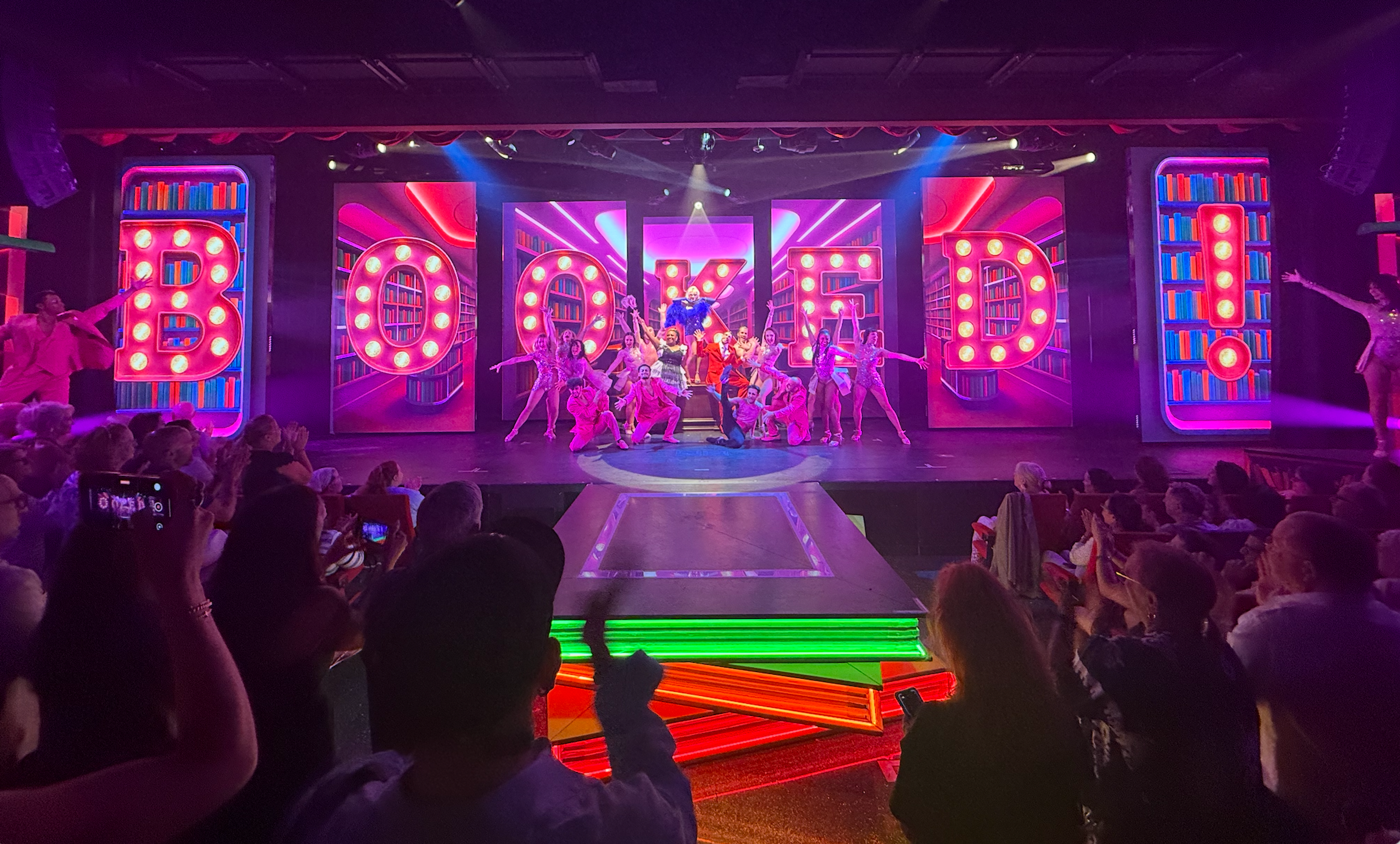
We don't think of a set as the room a story happens in. We think of it as one of the tools we use to tell that story. That distinction changes almost everything about how we approach a stage, long before a single piece gets built.
Not every set is a character. But every set has a job.
People sometimes ask us if we think of the set as a character in the story. The honest answer is: it depends on the show.
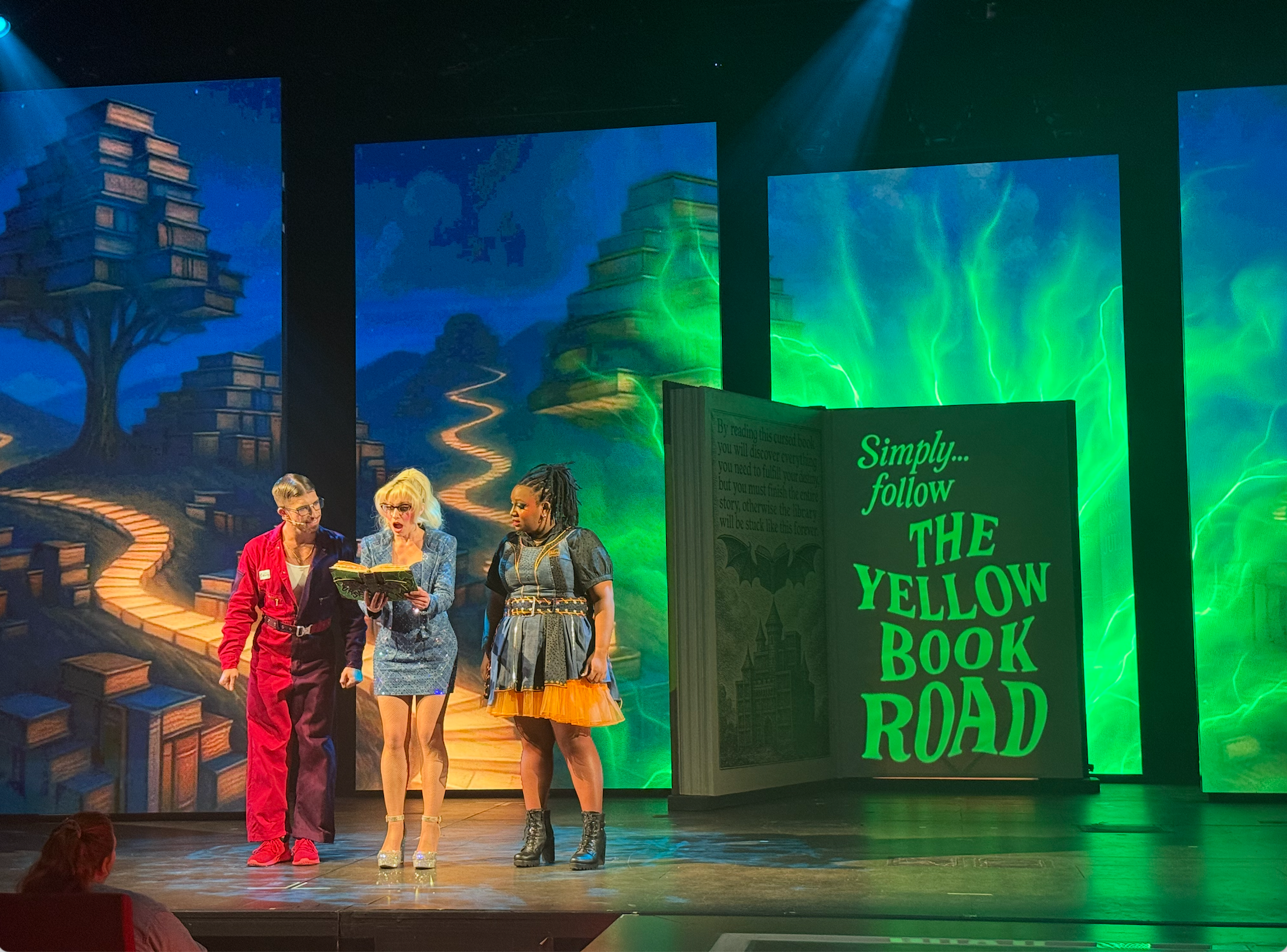
Booked, our latest show aboard Virgin Voyages, is the clearest case where the answer is yes. The book at the center of that set wasn't just a striking visual. It drove the plot as much as any performer did, so calling it a character is accurate.
Murder in the Manor, our original murder mystery show aboard Virgin Voyages, sits on the other end of that spectrum. Instead of leaning on built-out detail, we leaned on mood: neon accents, a vaporwave palette, a handful of deliberate choices instead of dozens. Nobody would say that set has lines in the script. But it did the job a character does anyway, convincing the audience they'd stepped into a specific world the moment the lights came up.
So no, not every set is a character. But every set is working, whether or not it ever gets a name.
Beauty and function are two different jobs, and they don't always agree
This is a tension we've learned to work with, not around. The instinct on the creative side is visual first: make it striking, make it feel like something. The instinct on the production side is functional first: what does this piece need to hold, support, or survive across a full run of shows.
Those two instincts don't always meet in the middle on the first try. A set piece can check every functional box and still be wrong if it doesn't look right, and it can look incredible and still fail the moment a performer actually has to use it. Neither side wins outright. We go back and forth, sometimes more than a few times, until both are true at once.
That back and forth isn't friction we're trying to eliminate. It's the actual work.
We're more strategic about this than people probably assume
It would be easy to assume some of our most memorable set moments happened by accident, a happy discovery in the middle of building something else. Honestly, that's rarely how it goes. When we wanted a set piece to feel interactive, like a projection making a portrait appear to speak, that was the plan from the start, not a surprise we stumbled into.
We'd rather be intentional and occasionally wrong than lucky and inconsistent. Every choice, down to a single color or texture, is meant to be doing something for the story, even when the audience never consciously clocks it.
The set is never neutral
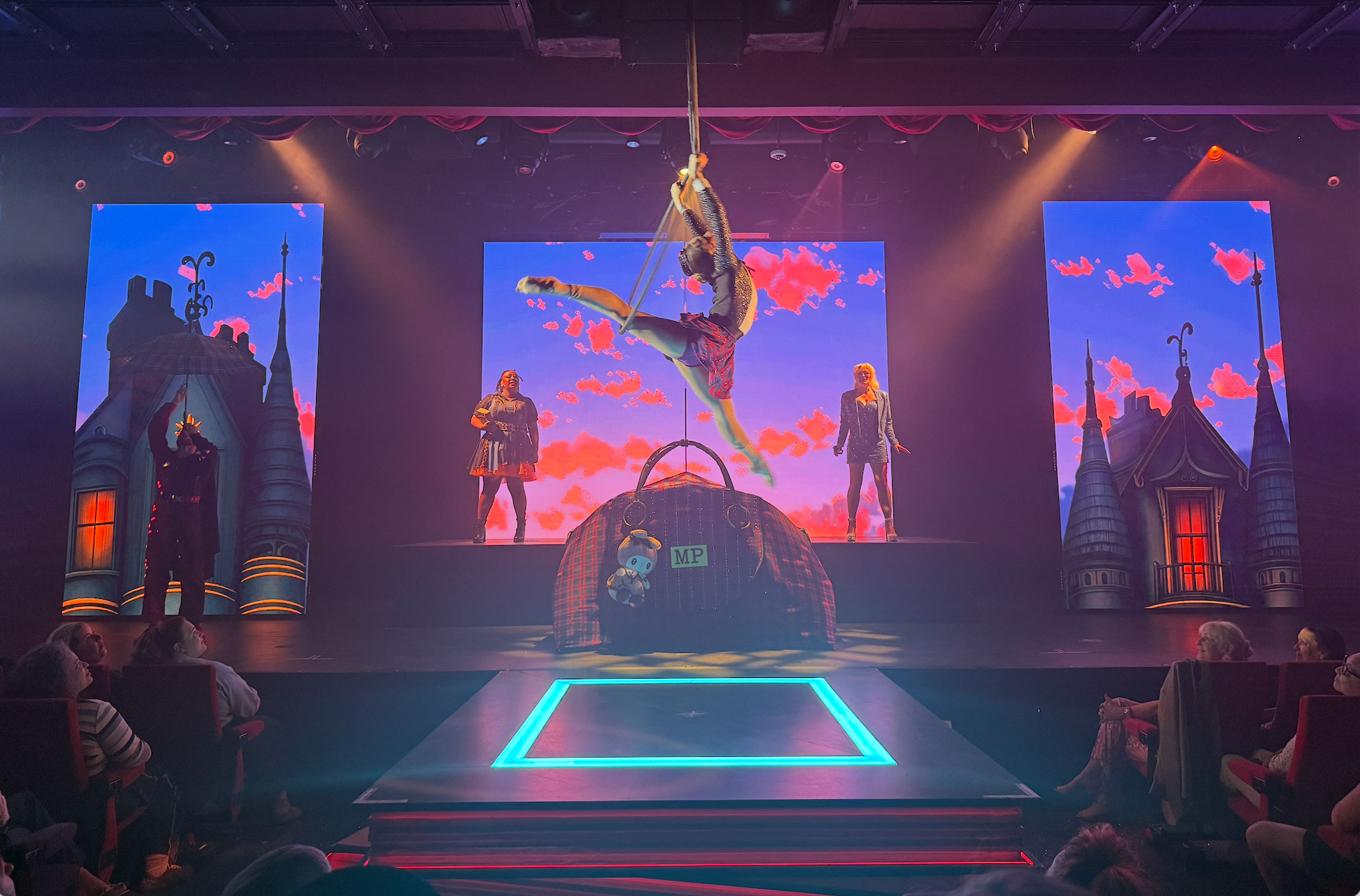
Across every show we've built, the pattern holds. The set is never just where the story happens to take place. It's part of how the story actually gets told, whether that means giving an object a literal voice or simply making sure an audience believes the world the moment they walk in.
That's the standard we hold every set to, regardless of budget or room size. The story comes first. The set has to earn its place in it.
Want to work with us? Let’s create something extraordinary together.
!